By Alan Kilpatrick
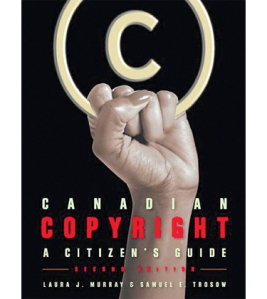
Does copyright law baffle you? Does anyone understand what it means when they click I agree? Do you have to be a detective to figure out who the copyright owner is?
Canadian Copyright: A Citizen’s Guide lays out the foundations of basic copyright law and discusses practical applications of copyright in a variety of contexts. Simply put, this book is for everyone. “Whether you are a parent, artist, business person, blogger, teacher, student, or music fan, questions about copyright have popped into your head or landed in your lap.” The authors address the momentous changes that rocked the world of Canadian copyright in 2012, including the Copyright Modernization Act (SC 2012, c 20) and five major Supreme Court of Canada decisions. Written in a comprehensible style, the second edition of this book was long overdue and eagerly anticipated by many.
The book is skillfully arranged into four parts: ideas, law, practice, and contexts. The book begins with a brief discussion of the philosophy and history of copyright law in part one and then proceeds to copyright scope, owner’s rights, and user’s rights in part two. Civil and criminal infringements are touched upon as well. Part three of the book “covers more specific terrain, considering the issues that copyright presents for people” who work in specific fields like music, digital media, or education. The book concludes with a discussion of copyright counterparts and the future of copyright law in Canada.
Both authors bring a wealth of diverse knowledge and authority to this subject. Samuel E. Trosow, a former professor of mine, is an associate professor at the University of Western Ontario, where he teaches in the Faculty of Law and the Faculty of Information and Media Studies. Laura J. Murray is an associate professor at Queen’s University, where she teaches English and Cultural Studies.
Canadian Copyright: A Citizen’s Guide is recommended without reservation.
(Reposted from Legal Sourcery)
By Alan Kilpatrick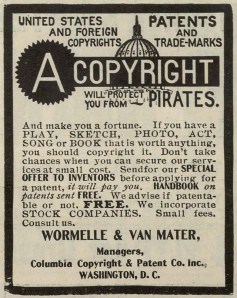
Copyright is a hot topic in Canada. Discussions on copyright often lead to contention and controversy. A basic understanding of copyright can help ensure fair and equitable access to law, justice, and information. Over the past several weeks, we have explored copyright balance and copyright owner rights. This week, we are going to discuss an important user right.
As with copyright owners, copyright users are also granted a variety of rights under the Copyright Act. The most important user right to know about is called fair dealing.
Fair dealing is the right, when fair and reasonable, to copy a substantial portion of a copyrighted work without permission from, or payment to, the copyright owner. Fair dealing is briefly expressed in section 29, 29.1, and 29.2 of the Act.
Fair dealing for the purpose of research, private study, education, parody, satire, criticism, review, and news reporting does not infringe copyright.
At paragraph 48 of CCH Canadian Ltd. v. Law Society of Upper Canada, 2004 SCC 13, the Supreme Court of Canada (SCC) described fair dealing as:
…an integral part of the Copyright Act…any act falling within the fair dealing exception will not be an infringement of copyright.
Fair dealing is an exception to copyright infringement. It is also crucial to maintaining proper copyright balance between owner rights and user rights. At paragraph 48 the SCC goes on to say:
The fair dealing exception…is a user’s right. In order to maintain the proper balance between the rights of a copyright owner and users’ interests, it must not be interpreted restrictively.
To maintain balance, we can think of user rights as a limit on owner rights. The Copyright Act does not define exactly what fair dealing is or the amount of copying considered fair. To help copyright users assess whether their copying falls within the fair dealing exception, the SCC established a fair dealing test involving six criteria at paragraph 60 of the same judgment:
…the purpose of the dealing, the character of the dealing, the amount of the dealing, the nature of the work, available alternatives to the dealing and the effect of the dealing on the work are all factors that could help determine whether or not a dealing is fair. These factors may be more or less relevant to assessing the fairness of a dealing…In some contexts, there may be factors other than those listed here that may help a court decide whether the dealing was fair.
Next time, we will explore these six criteria: purpose, character, amount, alternatives, nature, and effect. The Canadian Association of University Teachers has published an excellent description of the fair dealing test here.
(Reposted from Legal Sourcery)
By Alan Kilpatrick
Copyright is presently a hot topic in Canada. Discussions about copyright often lead to contention and controversy. A basic understanding of copyright law can help ensure fair and equitable access to law, justice, and information. Last week, we explored the principle of copyright balance. This week, we are going to look at the owner’s rights granted under the Copyright Act, RSC 1985, C-42.
Copyright owners, those who hold the copyright in a work, are granted a variety of economic rights under section 3(1) of the act,
For the purposes of this Act, “copyright”, in relation to a work, means the sole right to produce or reproduce the work or any substantial part thereof in any material form whatever…and to authorize any such acts.
Copyright owners have the sole right to reproduce a copyrighted work or a substantial portion of that work. Section 27(1) describes copyright infringement,
It is an infringement of copyright for any person to do, without the consent of the owner of the copyright, anything that by this Act only the owner of the copyright has the right to do.
Reproducing a substantial portion of a work without the owner’s consent is copyright infringement. Consequently, the act highlights a variety of punishments for commercial and non-commercial infringement. If you would like to copy a substantial portion of a copyrighted work, you will need to contact the owner and ask for permission.
It is important to highlight that the act only grants owners the sole right to reproduce a substantial portion of a copyrighted work. It is not an infringement to reproduce an insubstantial portion of a work. Copyright users are not required to seek the owner’s consent when copying an insubstantial portion. Please use reasonable judgment to determine whether the amount you would like to copy is a substantial or insubstantial.
Copyright users are also granted rights under the act. Next time, we will explore an important user right called fair dealing.
(Reposted from Legal Sourcery)
By Alan Kilpatrick
“A copyright will protect you from pirates. And make you a fortune.”
Copyright is presently a hot topic in Canada. Discussions about copyright often lead to contention and controversy. A basic understanding of copyright law can help ensure fair and equitable access to law, justice, and information.
What is copyright? Copyright law strives to encourage new ideas and the dissemination of knowledge. We can think of copyright primarily as a balance between two different interest groups: copyright owners and copyright users. Copyright owners hold the copyright in works. This can include publishers, artists, writers, or creators. Copyright users are those who use and enjoy copyrighted works. This includes consumers.
Two influential Supreme Court of Canada decisions have shaped the discussion on copyright balance:
CCH Canadian Ltd. v. Law Society of Upper Canada, 2004 SCC 13 explained that the Copyright Act, RSC 1985, C-42 has dual objectives and goals,
The Copyright Act has dual objectives…usually presented as a balance between promoting the public interest in the encouragement and dissemination of works of the arts and intellect and obtaining a just reward for the creator…The proper balance among these…lies not only in recognizing the creator’s rights but in giving due weight to their limited nature. In interpreting the Copyright Act, courts should strive to maintain an appropriate balance between these two goals.
Théberge v. Galerie d’Art du Petit Champlain inc., 2002 SCC 34 recognized the importance of maintaining this balance,
The proper balance among these and other public policy objectives lies not only in recognizing the creator’s rights but in giving due weight to their limited nature. In crassly economic terms it would be as inefficient to overcompensate artists and authors for the right of reproduction as it would be self-defeating to undercompensate them…
Copyright that lacks this balance, where things are tilted too far towards the interests of one group or the other, may hinder access to information. Copyright owners and users are each granted certain rights under the Copyright Act. In the coming weeks, we will discuss owner’s rights and user’s rights. During this discussion, it is important to recall that the Copyright Act is a balancing act.
(Reposted from Legal Sourcery)
___________________________________________
Sources
CanLII. (2002). Théberge v. Galerie d’Art du Petit Champlain inc. Retrieved from http://www.canlii.org/en/ca/scc/doc/2002/2002scc34/2002scc34.pdf
CanLII. (2004). Law Society of Upper Canada v. CCH Canadian Limited. Retrieved from http://www.canlii.org/en/ca/scc/doc/2004/2004scc13/2004scc13.pdf
Geist, M. (2010). From “Radical Extremism” to “Balanced Copyright”: Canadian Copyright and the Digital Agenda. Toronto: Irwin Law.
Justice Canada. (2014). Copyright Act (R.S.C., 1985, c. C-42). Retrieved from http://laws-lois.justice.gc.ca/eng/acts/C-42/index.html
By Alan Kilpatrick

More than a year ago, Canadian astronaut Chris Hadfield recorded a rendition of David Bowie’s Space Oddity while on board and in command of the International Space Station. The video, featuring Hadfield floating weightlessly playing a guitar, was a viral hit garnering over twenty million YouTube views. Later in May 2014, The Globe and Mail suddenly reported, Chris Hadfield’s famous ‘Space Oddity video taken down.
Like many Canadians, I was left wondering what had happened to this popular online video. The answer, as it turns out, had something to do with the collision of space law and copyright law. The Globe article highlighted Hadfield’s explanation:
We had permission from David Bowie’s people to post the video on YouTube for a year, and that year is up,” they said. “We are working on renewing the licence for it, but as there are no guarantees when it comes to videos shot in space…
Days later, The Economist wrote an article, How does copyright work in space? “Commander Hadfield was only 250 miles (400 km) up, so he was still subject to terrestrial intellectual-property regimes…” Prior to blasting out of the Earth’s atmosphere, the article explains Hadfield met with Bowie’s legal representatives to seek permission and record the rendition.
By Alan Kilpatrick
 Written language plays a central role in the world. It enables communication, learning, and business to take place between individuals and countries. Literacy permeates the fabric of life on the planet. It is difficult to picture any Western society or civilization without reading and writing.
However, Michael Ridley, Chief Librarian at the University of Guelph, asserts that reading and writing will eventually disappear in his new online ebook called Beyond Literacy.
Michael Ridley and his editorial team state that Beyond Literacy is a thought experiment “about the demise of literacy and the rise of other capabilities, capacities or tools that will effectively and advantageously displace reading and writing.” Beyond Literacy is a “book-like-thing [that] explores the possibility of a post-literate future. That is, a future in which literacy (reading and writing; visible language) has been displaced, replaced, or exceeded by a new or evolved capacity, capability or tool.”
How will lawyers practice law in a post-literature future? How will the law be affected by the disappearance of written language?
The ebook suggests that the disappearance of reading and writing will not harken a new dark age, “but rather the beginning of an era of advanced human capability and connection.” Check out the ebook here!
What you think about this? Are reading and writing really doomed?
(Reposted from Legal Sourcery)
By Alan Kilpatrick
In June, I had the privilege of travelling to the National Capital Region and attending the 2014 New Law Librarians’ Institute (NLLI). The Institute, ponsored annually by the Canadian Association of Law Libraries,was held at the Brian Dickson Law Library at the University of Ottawa.
 The institute describes itself as “an intensive, week-long program aimed at developing librarians’ skills in the key competencies of law librarianship.” NLLI is a boot camp style introduction to all areas of Canadian law. As a new information professional I was excited to attend. Twenty other law librarians from across Canada attended as well.
Knowledgeable professors from the University of Ottawa Faculty of Law lectured throughout the week on key areas such as criminal law, tort law, constitutional law, civil law, and Aboriginal law.
This year NLLI was hosted by the Brian Dickson Law Library. I would like to thank the Brian Dickson Law Library, the Canadian Association of Law Libraries, and all those who made the 2014 institute possible. I encourage all prospective and new law librarians to consider attending the institute next year.
Other legal topics covered at the 2014 institute included:
• Finding and Updating Legislation
• Introduction to Property Law
• Introduction to Family Law
• Finding and Updating Case Law
• Researching Secondary Legal Literature
• Introduction to Quebec Civil Law
• Civil law and Common Law Comparison
• Introduction to Intellectual Property
If you have any questions, please contact me. I would be happy to let you know more about my worthwhile experience at the New Law Librarians’ Institute. Please find my detailed notes from the institute here.
(Reposted from Legal Sourcery)
By Alan Kilpatrick
In April, Slaw posted an engaging article, Australian Study Highlights Big Bang for the Buck of Law Libraries, by Michel-Adrien Sheppard. Michel-Adrian Sheppard is a law librarian in Ottawa and a frequent contributor to Slaw.
The Slaw article highlights a recent Australian study, Putting a Value on Priceless – An Independent Assessment of the Return on Investment of Special Libraries in Australia, promoting the value of law libraries. As an information professional, I am confident libraries can continue to support, compliment, and add value to the legal profession.
The independent study, commissioned by a variety of Australian library associations, discusses the return on investment of special libraries. Special libraries include law, health, corporate, and government libraries. “The indicative result from this work is that special libraries have been found to return $5.43 for every $1 invested — and that’s a conservative estimate of their real contribution.” The study indicates that the knowledge and expertise of a professional librarian “is essential to achieving the $5.43 for every dollar return on investment”.
The incredible return on investment made me think about how information professionals can continue to demonstrate value. The American Association of Law Libraries explains,
Law Librarians are resource evaluators, access facilitators, expert researchers, teachers, and trainers. Law librarians possess the knowledge and skills to realize the full value of information in a changing work environment. Law librarians can bring value to organizations by reducing research time and information costs, thus saving money and resources.
On Firmer Ground is a collaborative blog created by law librarians, the Special Library Association, and the Canadian Association of Law Librarians. The blog promotes the worth of law firm librarians and discusses the challenges they face. On Firmer Ground’s belief is that,
In an era of information overload, law librarians possess the expertise to find those golden nuggets of information that allow law firm leaders to make actionable decisions that benefit firms and clients alike.
When you come down to the brass tacks, librarians are a valuable commodity. Bonnie Swoger, a science and technology librarian, firmly explains why librarians need bigger egos,
Because librarians are smart. Damned smart. They are talented, knowledgable, hardworking and willing to go out their way to help others out. If you want to find something out or get something done you should definitely ask a librarian.
What is your opinion on the value of librarians and law libraries? Do you agree with the study? Please post your comments!
(Reposted from Legal Sourcery)
 By Alan Kilpatrick
Last month, I travelled to the annual Saskatchewan Library Association Conference. I attended an engaging session on ebooks and the future of libraries called From Gatekeeper to Gardener: the E-publishing Revolution. James LaRue, the former director of Douglas County Libraries (DCL), presented the session. James is a frequent speaker on library and technology issues. DCL is a public library system in Colorado that has had a great deal of success with ebooks. DCL is often described as having gone from being the worst public library system in America to being the best public library system as a result of this ebook success.
During the session, James explained that “a revolution in publishing presents either a tremendous opportunity or tremendous threat to the viability of libraries.” It is widely known that ebooks are becoming increasingly popular. Demand for ebooks is astounding and the number of ebooks published has increased exponentially. Unfortunately, the popularity of ebooks forces an existential challenge on libraries. Librarians have blogged about this ebook crisis frequently in recent years:
• The Ebook Cargo Cult – In the Library with the Lead Pipe
• Ebooks for Libraries: Still a Ripoff – Annoyed Librarian
• I’m Breaking Up with Ebooks (And You Can Too) – Librarian in Black
• You’ll Need a PhD To Make Sense Of The Pricing Schemes Publishers Impose On Libraries – Forbes Magazine Read more…
By Alan Kilpatrick
I recently created a series of online tutorial videos to assist with searching CanLII. The tutorials demonstrate how to search CanLII for case law and legislation in a variety of practical ways:
1. A CanLII “How-To”
2. Searching for a Case with a Common Name
3. Noting Up a Case with CanLII
4. Searching for Case Law on a Point of Law
5. Searching for Legislation
The videos were created with a video editing program called Camtasia. Camtasia is an excellent resource for librarians that is available for a free thirty day download . A comprehensive Camtasia tutorial can be found here.
Searching the New CanLII (1) A Basic “How-To” (5:57) from Law Society of Sask Library on Vimeo.

 LibraryCanuck