Teaching Legal Research to Diverse Audiences: Practical Strategies and Sustainable Approaches: Panel Recap
By Alan Kilpatrick
In today’s legal needs and information-seeking environment, members of the public with legal problems are turning to the internet and GenAI (generative artificial intelligence) tools for information and answers, and GenAI is making it harder to distinguish credible legal information from misinformation.
Legal information professionals and law librarians are well-positioned to connect the public with credible sources of legal information and to teach the public how to research the law using reputable resources and tools. The key challenge in teaching the public to research the law is ensuring that a basic understanding of core legal concepts and research methodology is established before introducing the legal research tool itself. In practice, this requires setting aside our assumptions about legal research and what we think people should know and intentionally translating everything for an audience with little or no prior knowledge of the law and legal system.
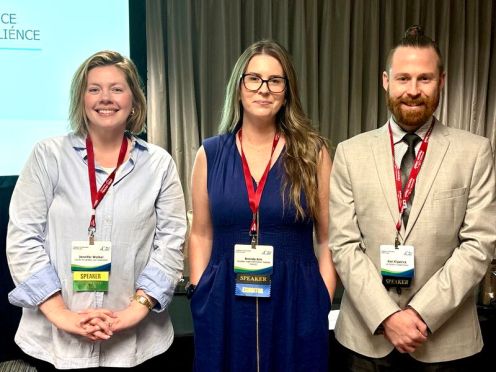
On May 26, 2026, I spoke about this topic in Teaching Legal Research to Diverse Audiences: Practical Strategies and Sustainable Approaches, a panel I presented with Brenda Alm (Manager, Partnerships and Content, CanLII) and Jennifer Walker (Head Librarian, County of Carleton Law Association) at the 2026 Canadian Association of Law Libraries (CALL/ACBD) Conference:
Free legal research resources play an increasingly important role across the legal information landscape. Self-represented litigants rely on them exclusively, small firms balance costs against research needs, and organizations of all sizes reassess their subscription models. This creates new teaching challenges for legal information professionals serving diverse user populations. This panel brings together practitioners from law society, law association, and open-access contexts to explore practical teaching strategies using CanLII as a common framework for discussion.
Access to legal information is a consistently identified public need, and in Saskatchewan, 40% of individuals experiencing a legal problem report searching the internet for legal information. Legal information builds awareness of legal rights and responsibilities, provides options for assistance, and may prompt individuals to resolve their legal issues or seek advice from a legal professional. These findings show that increased access to legal services and justice depends on public access to credible legal information sources, public awareness of legal assistance and advice options, and, perhaps, the public’s ability to navigate the law and conduct their own legal research.
Whether using CanLII or evaluating information generated by GenAI, effective public legal information use/research begins with a foundation in core legal concepts and research methodology. Foundation first. Tools second.


Comments are closed.