By Alan Kilpatrick
Today lawyers are faced with what seems like an overwhelming number of legal research resources, textbooks, and guides. With your busy schedule, how can you quickly and easily identify the most useful resources from this multitude of information? That’s where the Law Society Library comes in.
Law librarians are here to aid you in selecting the most relevant resources to save you time and energy. On Firmer Ground, a blog promoting the value of law librarians, explains that “in an era of information overload, law librarians possess the expertise to find those golden nuggets of information that allow law firm leaders to make actionable decisions that benefit firms and clients alike.”
As one of the librarians with the Law Society Library, I work with legal resources on a daily basis and am familiar with many research guides. For those interested in learning more about the legal research process, here are my top three pick for legal research texts:
The Comprehensive Guide to Legal Research, Writing & Analysis
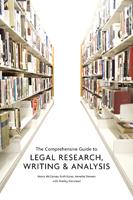 By Moira McCarney, Ruth Kuras, Annette Demers, and Shelley Kierstead
Emond Publications, 2013
From Emond website: Offers systematic, practical instruction, taking readers through context-based research problems. The book highlights examples and research tasks graphically and in full colour to facilitate the pedagogic experience. Screen captures of online resources are also included, assisting the researcher’s understanding.
Legal Research and Writing, 4th Edition
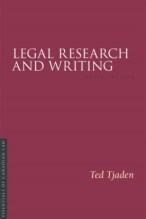 By Ted Tjaden
Irwin Law, 2016
From the Irwin Law website: Seeks to explain the practical skills needed for print and online legal research and for legal writing. It provides a current and comprehensive look at the topic, consolidating information on legal research and writing into one handy, easy-to-use resource. The book is written for both seasoned practitioners, seeking to add the latest sources and techniques to their research arsenals, and for beginning law students who face a bewildering array of information
The Practical Guide to Canadian Legal Research, 4th Edition
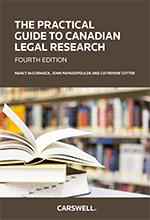 By Nancy McCormack, John Papadopoulos, and Catherine Cotter
Carswell, 2015
From the Carswell website: This essential guidebook to legal research introduces users to the various legal research materials available to lawyers, law students, law clerks and legal academics. It teaches readers efficient legal research skills, and acts as a reference source by providing some of the essential background required to research specific areas of the law. Along with detailed research strategies, a comprehensive checklist is included.
By Alan Kilpatrick
What did it take at the turn of the century to become a sleuth for hire in Saskatchewan? Before hitting the streets to gumshoe, a private detective license had to be obtained. An Act Respecting Private Detectives came into force in January 1913. It explained that,
No person shall engage or advertise the business of a private detective or indicate upon any letter, document or paper that he is engaged in the business of a private detective without having first obtained a license from the attorney general.
Private detective applicants were evaluated on the basis of their character and competency. An application fee of $100 had to be paid before the license was issued.
The attorney general upon such application and upon such further inquiry and investigation he may deem proper of the character and competency of the applicant…and upon receiving from the applicant the fee of $100 may issue and deliver to such applicant a license …to conduct such business…
An Act Respecting Private Detectives was repealed in 1976.
Do you need help with historical legislation research? The Law Society of Saskatchewan Library carries a complete set of the Statutes of Saskatchewan from the 1870s to the present.
By Alan Kilpatrick
Are you using CanLII Connects for your legal research yet? CanLII Connects is a phenomenal website that features high-quality legal commentary and summaries of Canadian court decisions. It’s a continually growing source of authoritative legal commentary that is free, accessible, and open to anyone. Currently, the site boasts summaries of thousands of Canadian decisions dating back to the 1800s.
CanLII Connects is more than just a website. It’s a community resource. It brings together members of the legal community and provides a space to share their analysis and opinions of court decisions. The commentary found on CanLII Connects is created by members of the legal community. Only qualified members of the legal community and registered users of this site are permitted to post. This maintains quality.
From the homepage, summaries can be quickly sorted by jurisdiction, date, or author. This makes it easy to find summaries from a particular province or contributor. Each summary is linked directly to the full text case on CanLII. Conversely, cases on CanLII are linked to any summaries available on CanLII Connects.
CanLII Connects has made big waves and received some prestigious awards including the Canadian lawyer Magazine’s Readers’ Choice Award and the Canadian Law Blog Award.
The Law Society of Saskatchewan Library has been a major supporter of CanLII Connects since it was launched in April 2014. To date, the Law Society Library has submitted almost 25,000 summaries of Saskatchewan court decisions to CanLII Connects. This represents our entire collection of case digests. As you may know, the Law Society Library employs a number of contract digesters to summarize and digest Saskatchewan court decisions. These digests appear in Case Mail, our popular semi-monthly newsletter, and in the Saskatchewan Cases database.
We have been proud to support CanLII Connects. It is an impressive endeavour that signifies major changes to the world of legal information and publishing.
By Alan Kilpatrick
Margaret Wall, a librarian at the University of Toronto, is currently developing an online registry of Canadian government information digitization projects. Her ambitious goal is to create a single access point to all digitized government information, valuable to researchers and librarians. This registry will serve as a convenient resource for those searching for government records that have been digitized. Additionally, it will enable libraries digitizing government records to easily collaborate with others also digitizing government information.
You can find more information about this exciting project at govinforegistry.blogspot.ca. It’s yet another example of the library community stepping up, promoting access to information, and creating value.
A similar exciting project was initiated by Sam-chin Li, the Reference & Government Information Librarian at the University of Toronto, in 2014. The project is seeking to locate“fugitive” government documents. Fugitive documents described as documents not collected by the Government of Canada’s official depository program.
Projects like this fly in the face of the common myth that “everything is on the internet now.” Digitization and preservation of information in our digital world is complex and challenging work. It’s a task that librarians and libraries are supremely suited to.
By Alan Kilpatrick
Late last year, Harvard Law announced it was involved in a project to digitize its entire collection of American case law. Harvard possesses one of the largest collections of American court decision in the world. The case law digitized during this “Free the Law” project is to be made freely available to anyone through an online searchable database by 2017. The project involves scanning over 40,000 law reports and textbooks, containing over 40 million pages of court decisions, from Harvard’s Law Library collection.
The p roject will improve access to justice in the United States by making legal information more open, accessible, and equitable. It will be beneficial to anyone needing to access American law: lawyers, academics, researchers, and the public. Currently, access to American case law is largely restricted to commercial subscription databases, like Westlaw and Quicklaw, that are prohibitively expensive. Access to the law should not be restricted to those select few who can afford the exorbitant subscription rates. In Canada, CanLII has been providing free access to Canadian law since 2001.
Jonathan Zittrain, a professor at Harvard Law, has recognised the special role law libraries play in digitizing and making case law accessible to all. “Libraries were founded as an engine for the democratization of knowledge, and the digitization of Harvard Law School’s collection of U.S. case law is a tremendous step forward in making legal information open and easily accessible to the public.” In January 2014, the Law Society of Saskatchewan Library partnered with Lexum and began work on a digitization project to provide complete coverage of Saskatchewan case law on CanLII. Over the past two years, the Law Society Library has digitized over 16000 Saskatchewan decisions. As a result of this project, CanLII now features a virtually complete record of all reported Saskatchewan case law back to 1905.
Law libraries are playing a crucial role in the efforts to make law more accessible and open.
By Alan Kilpatrick
I created a list of the notable tasks I accomplished as a librarian in 2015:
Saskatchewan Cases Database Tutorial Videos (January 2015)
I created a series of tutorial videos to assist with searching the Saskatchewan Cases Database. The videos demonstrate how to use the database in a variety of ways including noting up a case, noting up a statute, and locating a case with a common name.
CALL Social Media Coordinator (March 2015)
I was appointed as CALL’s Social Media Coordinator in early 2015. My role has been to coordinate the association’s social media channels (Twitter, Facebook, and LinkedIn) more systematically and effectively.
CALL Conference Lightening Talk (May 2015)
This year’s CALL Conference featured a new conference session, lightening talks. I presented a lightening talk promoting the library’s blog, Legal Sourcery, to the law librarian community in Canada. The talk was titled Legal Sourcery – Blogging in Law Libraries.
Saskatchewan Library Association Spotlight On Session (May 2015)
I presented a Spotlight-On session about Legal Sourcery at the 2015 Saskatchewan Library Association Conference. The talk explored how Legal Sourcery has enabled the library to engage its users and shape an exciting new brand for the library.
Melville Rural Library Trip (May 2015)
I led two trips to the Melville Library in May 2015. During the trip, I met with the lawyers in Melville, represented the library, and conducted library advocacy.
ICLR Online Negotiation (June 2015)
I negotiated and purchased a license for ICLR Online, a British case law database. After setting up a free trial, I evaluated the database for usability and coverage and obtained quotes, pricing details, and license options from the vendor.
Legal Research Boot Camp (June 2015)
I helped plan and conduct a two day legal research boot camp designed for new lawyers and individuals wanting to refresh their legal research skills. I presented interactive sessions about the library catalogue, the Canadian Encyclopedic Digest, and the Canadian Abridgment Digest.
Learning to Use LegalTrac – Webinar for the Saskatchewan Provincial Library (September 2015)
I volunteered to present a one hour webinar on LegalTrac for public library staff throughout the province. My hope is that, by connecting with public librarians through this webinar, they will be able to better assist members of the public coming to the library with legal questions.
Webinars and Presentations in 2015
I co-presented three webinars this year:
• Melanie Hodges Neufeld, Ken Fox, and Alan Kilpatrick. (2015, August 26). Legal Research Basics with the Law Society of Saskatchewan Library. Presentation for the Saskatchewan Bar Admissions Course
• Ken Fox and Alan (2015, October 21). Criminal Sentencing with the Law Society of Saskatchewan Library. Webinar for the Law Society of Saskatchewan Continuing Professional Development Program
• Ken Fox and Alan (2015, November 24). Introducing WestlawNext: Getting The Most Out Of It! Webinar for the Law Society of Saskatchewan Continuing Professional Development Program.
By Alan Kilpatrick
What is ClickLaw? ClickLaw is a website for the British Columbia public that enhances access to justice. It is a one-stop resource connecting the public with reliable plain-language legal information, trustworthy legal education, and places to go for legal assistance. ClickLaw does link to some cases and laws. However, this is not the main purpose of the site. Its main purpose is to help the public solve common legal problems and find help.
The site is organized with simplicity and browsing in mind. One great feature is the help map. Members of the public can locate legal assistance in their own community by searching the helpmap by topic, keyword, or location.
Over 25 organizations in BC contribute to ClickLaw. What is great is that contributors manage their own content on ClickLaw. CLBC is just the coach. ClickLaw’s Program Coordinator, Audrey Jun, recently won a prestigious award for ClickLaw, the McMillian Award for Innovation in Court Technology. The site has been recognized as a potential solution to access to justice problems for self-represented litigants.
A key component of ClickLaw are the ClickLaw Wikibooks. These are collaboratively developed wikibooks, aimed at the public, covering a wide variety of common legal topics in plain language.
Members of the public will find these books accessible and easy to use: they are freely available online, printable, fully searchable, and downloadable in a variety of e-formats. The books are kept accurate and up-to-date by their contributors. As the books are in wiki format, they can be easily updated to reflect changes in the law. This is ideal because Canadian law is always evolving.
Some of the most popular ClickLaw Wikibook titles include JP Boyd on Family Law, Legal Help for British Columbians, Learning about the Law, and The Beginners Guide to Finding Legal Information: A How-To for Legal Research and Representing Yourself in Court in British Columbia.
Resources Consulted
About Clicklaw (http://www.clicklaw.bc.ca/content/about)
Clicklaw Wikibooks (http://wiki.clicklaw.bc.ca/index.php/Clicklaw_Wikibooks)
By Alan Kilpatrick
It’s no secret that technology is rapidly changing how legal information is accessed. We are witnessing fundamental changes to the value of traditional print collections and an explosion of digital legal resources. The Law Society of Saskatchewan Library is at the leading edge of these changes and dedicated to providing Law Society members with needed resources in convenient digital formats. Over the past two years, the Law Society Library has drastically increased coverage of Saskatchewan case law on CanLII back to 1905.
The Law Society Library has also laboured to provide members with a substantial collection of authoritative legal ebooks and online loose-leafs. We are thrilled to announce that the Law Society is now able to provide lawyers in the province with desktop access to almost 200 ebooks and online loose-leafs from Irwin Law, Emond Publishing, and WestlawNext. These are conveniently available at your fingertips on your desktop, laptop, or mobile devices. All lawyers, regardless of location or firm size, have the same great access!
The Irwin Law Ebrary provides the popular Essentials of Canadian Law series. Emond Publications provides the Working with the Law and Casebook Collection. WestlawNext provides a number of popular loose-leaf titles like Ewaschuk on Criminal Pleading and Practice.
Check out some of Legal Sourcery’s past research tips to get the most out of these amazing ebooks:
• Ebooks from Irwin Law
• Emond Montgomery Subscription for Members
• Ebooks and Online Loose-leafs Available through WestlawNext Canada
If you have any questions about ebooks, ask a Law Society Librarian. We are pleased to provide high-quality legal research services to Saskatchewan members in person, on the telephone, or by email.
(Reposted from Legal Sourcery)
By Alan Kilpatrick
LawMatters is a Courthouse Libraries BC (CLBC) program directed towards public libraries in British Columbia. Through this program, CLBC collaborates with public libraries to provide members of the public with accurate legal information at their local public library. Public libraries receive a large volume of legal reference questions. A recent CLBC study estimated BC public libraries receive more than 35,000 legal reference questions per year. As such, public libraries are the natural place to connect with members of the public who have legal information needs.
What exactly does the program offer? Public libraries are able to develop, update, and increase their print legal collections through LawMatters program grants. To ensure libraries carry the correct legal resources, the program produces the Law Books for Libraries List for small, medium, and large libraries. The program also provides libraries with legal reference training and ongoing support to give public library staff the skills needed to help members of the public with legal information needs. You can find more information on the LawMatters website.
Libraries across Canada are working together to improve access to justice and create real solutions to the barriers self-represented litigants face. For example, the Law Society of Saskatchewan Library hosts free family law information sessions in collaboration with the Saskatchewan Family Law Information Centre and provides members of the Saskatchewan public with basic legal information.
It’s time for the Saskatchewan legal community to include libraries and librarians in the access to justice discussion. We’ve earned our place at the table.
By Alan Kilpatrick
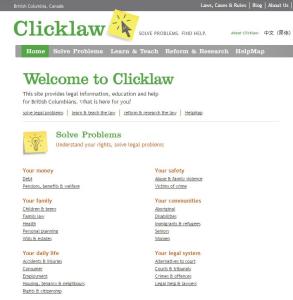 Audrey Jun, the Clicklaw Program Coordinator at Courthouse Libraries BC (CLBC), recently received the McMillan Award for Innovation in Court Technology for Clicklaw. Clicklaw is an outstanding resource, managed by CLBC, that provides reliable and free legal information to members of the public and self-represented litigants in BC. Clicklaw endeavors to help the public understand their rights and solve their legal problems. Legal Sourcery would like to congratulate Ms. Jun on receiving this prestigious award.
This is another exciting example of how law libraries can step up and improve access to justice for self-represented litigants. Law libraries are uniquely positioned to think outside of the box and identify real solutions to systematic barriers in the Canadian legal system. For example, the Law Society of Saskatchewan Library now offers free monthly family law information sessions in partnership with the Saskatchewan Family Law Information Centre.
Works Cited
National Center for State Courts. (2015). Ms. Audrey Jun Receives First McMillan Award. Retrieved from http://courttechbulletin.blogspot.ca/2015/09/ms-audrey-jun-receives-first-mcmillan.html
(Reposted from Legal Sourcery)

 LibraryCanuck